

MANAGERIAL ECONOMICS IN THE ERA OF DISRUPTIONS: DESIGNING BUSINESS DECISIONS BASED ON DATA, RISK, AND INNOVATION
Starting: Rp60,000
Collaboratively written by :
Lisa Hermawati
Maidiana Astuti Handayani
Marieska Lupikawaty
Rini Efrianti
Delta Khairunnisa
Anna Yulianita
Neneng Miskiyah
Lukmanul Hakim
Editor :
Robby Efendi, SE, ME
Mutia Anggraweni, SE.,MM
EISBN :
978-629-7931-71-5
Alasan berbelanja di Mile Media
- Pengarsipan Buku di Perpustakaan Negara Malaysia
- Penulis mendapatkan royalti 40%
- Publish di Playbook
- Buku terindeks Google Scholar
- Free sertifikat HKI dan sertifikat penulis
Description
Reviews (0)
Description
| Select Book | E-Book, Ebook (Indonesian Version), Printed Book, Printed Book (Indonesian Version) |
|---|---|
| SKU | N/A |
| Category | Book & Ebook, Ekonomi |
This book discusses Managerial Economics in the Era of Disruption. It includes the reconstruction of managerial economics in a disruptive business landscape, data-driven decision-making in managerial decision-making, artificial intelligence and the evolution of corporate economic strategies, demand forecasting and anticipating changes in market behavior, adaptive pricing strategies in facing demand dynamics, behavioral economics and consumer rationality in business decisions, risk and uncertainty management in corporate strategy as well as business model innovation and corporate resilience in the digital era.
This chapter argues that managerial economics is not experiencing a crisis of relevance, but rather a crisis of assumptions. The inherited analytical tools—marginal analysis, elasticity, cost structure, and market structure—remain valid as decision-making logic, but many of their underlying premises (stable parameters, scarce and symmetric information, clear firm boundaries, and the singular objective of short-term profit maximization) have lost their explanatory power in a disruptive business landscape. Through a conceptual review of the literature on managerial economics, information economics, risk theory, and innovation economics, this chapter offers a multi-layered reconstruction: ontological (what are now the firm’s resources and boundaries), epistemic (where market knowledge is derived), and normative (what values are being optimized). This reconstruction is operationalized within the Data Risk–Innovation (DRI) framework as a diagnostic heuristic for managers. The chapter also places this reconstruction within Indonesia’s structural context of the dominance of micro, small, and medium enterprises, the rise of cooperatives and the village economy, and the gap in technology absorption capacity. It concludes with a roadmap for subsequent chapters.
For more than half a century, managerial economics has rested on a simple and seemingly undeniable promise: if managers understand the logic of scarcity, they can choose. From that promise emerged a set of tools familiar to every economics classroom: marginal analysis, demand elasticity, short-run and long-run cost
structures, market structure models, and forecasting techniques and investment feasibility analysis. These tools were designed for a world that, if not completely stable, could at least be considered temporarily stable: demand moves slowly, competitors are identifiable, technology changes incrementally, and parameters estimated last year are still good enough to guide decisions this year.
Reviews (0)
Leave a Reply
You also like

EKONOMI PEMBANGUNAN DAN KESEJAHTERAAN SOSIAL
Rp300,000 Select options This product has multiple variants. The options may be chosen on the product page
PENGINDERAAN JAUH UNTUK PEMANTAUAN HUTAN
Rp300,000 Select options This product has multiple variants. The options may be chosen on the product page
INTRODUCTION TO MICRO AND MACRO ECONOMICS
Starting: Rp65,000 Select options This product has multiple variants. The options may be chosen on the product page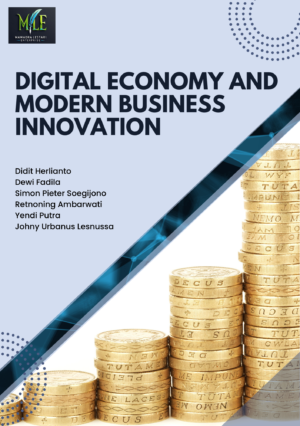
DIGITAL ECONOMY AND MODERN BUSINESS INNOVATION
Starting: Rp59,000 Select options This product has multiple variants. The options may be chosen on the product page
INTRODUCTION TO CURRICULUM
Starting: Rp49,000 Select options This product has multiple variants. The options may be chosen on the product page
ENVIRONMENTAL ECONOMICS
Starting: Rp58,000 Select options This product has multiple variants. The options may be chosen on the product page
BAHASA INDONESIA DALAM KONTEKS AKADEMIK DAN PROFESIONAL
Rp300,000 Select options This product has multiple variants. The options may be chosen on the product page
INTRODUCTION TO COOPERATIVES
Starting: Rp57,000 Select options This product has multiple variants. The options may be chosen on the product page

PUBLIC INTERNATIONAL LAW
Starting: Rp56,000 Select options This product has multiple variants. The options may be chosen on the product page

FUNDAMENTAL OF MANAGEMENT
Starting: Rp56,000 Select options This product has multiple variants. The options may be chosen on the product page
ANTROPOLOGI EKONOMI DAN POLITIK MASYARAKAT TRADISIONAL
Rp300,000 Select options This product has multiple variants. The options may be chosen on the product page
POSTHARVEST PHYSIOLOGY AND TECHNOLOGY BASED ON OBE
Starting: Rp56,000 Select options This product has multiple variants. The options may be chosen on the product page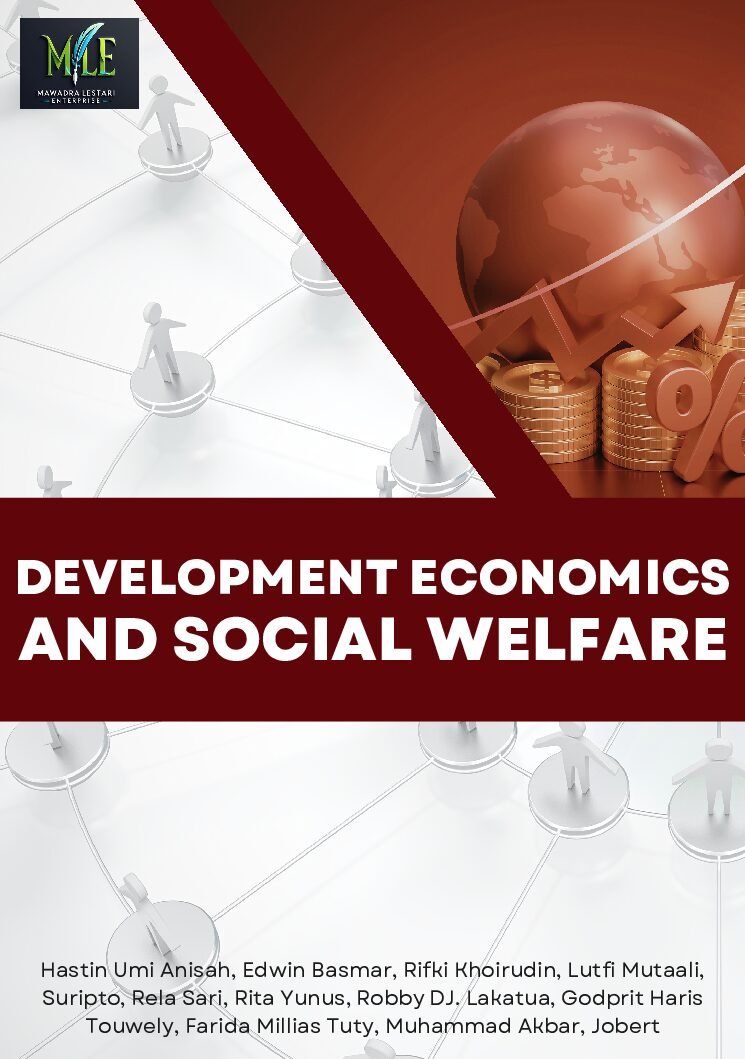
Development Economics and Social Welfare
Starting: Rp59,000 Select options This product has multiple variants. The options may be chosen on the product page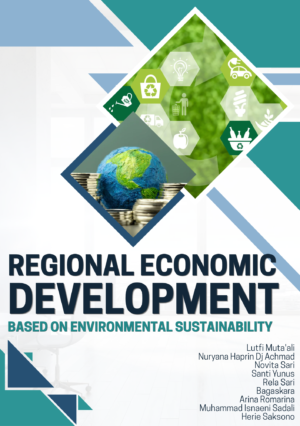
REGIONAL ECONOMIC DEVELOPMENT BASED ON ENVIRONMENTAL SUSTAINABILITY
Starting: Rp70,000 Select options This product has multiple variants. The options may be chosen on the product page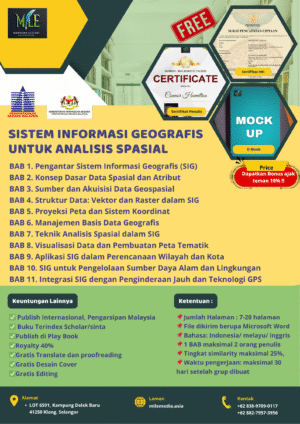
SISTEM INFORMASI GEOGRAFIS UNTUK ANALISIS SPASIAL
Rp300,000 Select options This product has multiple variants. The options may be chosen on the product page
ENTREPRENEURIAL DYNAMICS
Starting: Rp40,000 Select options This product has multiple variants. The options may be chosen on the product page
RESEARCH METHODOLOGY
Starting: Rp45,000 Select options This product has multiple variants. The options may be chosen on the product page
The Natural Confidance
Original price was: Rp105,000.Rp50,500Current price is: Rp50,500. Add to cart


Reviews
There are no reviews yet.