

FRESHWATER AND MARINE FISH CULTIVATION TECHNOLOGY
Starting: Rp59,000
Collaboratively written by :
Akhmad Rasyid Redha
Ika Wahyuni Putri
Atmadinata Aviantara
Nofembrianti
Windu Sukendar
Hasrah
Harya Bimasuci
Nurul Novelia Fuandila
Suardi Laheng
Editor :
Prof. Najiah
Mohd Irwan
EISBN :
978-629-7931-31-9
Alasan berbelanja di Mile Media
- Pengarsipan Buku di Perpustakaan Negara Malaysia
- Penulis mendapatkan royalti 40%
- Publish di Playbook
- Buku terindeks Google Scholar
- Free sertifikat HKI dan sertifikat penulis
Description
Reviews (0)
Description
| Select Book | E-Book, Ebook (Indonesian Version), Printed Book, Printed Book (Indonesian Version) |
|---|---|
| SKU | N/A |
| Category | Book & Ebook, Ilmu Perikanan |
This book discusses freshwater and marine fish farming technology. It includes an introduction to freshwater and marine fish farming, types of farmed fish and their characteristics, fish breeding and spawning technology, water quality and environmental management, fish feeding and nutrition techniques, fish disease prevention and control, and the concept of integration in environmentally friendly farming.
Fish farming, or aquaculture, fundamentally refers to all activities involving the management and control of aquatic environments to produce aquatic organisms beneficial to humans, both animals and plants (Billard, 1979). Globally, this activity is defined as the effort to maintain aquatic organisms including fish, mollusks, crustaceans, and aquatic plants through human assistance throughout their life cycle to increase productivity. According toFood and Agriculture Organization(FAO), these interventions are specific and include systematic maintenance and breeding, in contrast to capture fisheries which are highly dependent on the natural productivity of the waters (FAO, 2022).
From an economic and legal perspective, fish farming is characterized by individual or corporate ownership of the stock of organisms maintained during the production period (Stickney &
Treece, 2012). This aligns with the broader use of the term aquaculture, where it is a general term encompassing the activities of cultivating and raising animals or plants for a specific purpose. This is in line with the opinion of (Redha, 2025b) who stated that the implementation of technology in fish hatchery systems aims to accelerate productivity and ensure the availability of seeds on a sustainable basis, reducing operational dependence on fluctuations in natural factors. In the context of fisheries, aquaculture means a systematic effort to produce fish in a controlled manner (Alawi & Tang, 2017). The shift in modern definitions is now not only oriented towards harvest results (output-oriented), but also on the efficiency of resource utilization and minimization of environmental impacts to ensure sustainable production (Stentiford et al., 2017).
Reviews (0)
Leave a Reply
You also like

ISLAMIC EDUCATION SCIENCE
Starting: Rp56,000 Select options This product has multiple variants. The options may be chosen on the product page
Kimia Dasar
Rp300,000 Select options This product has multiple variants. The options may be chosen on the product page
SILVIKULTUR DAN TEKNOLOGI PERBENIHAN HUTAN
Rp300,000 Select options This product has multiple variants. The options may be chosen on the product page
INTRODUCTION TO DIGITAL ECONOMY
Starting: Rp58,000 Select options This product has multiple variants. The options may be chosen on the product page
TEORI SOSIOLOGI KLASIK DAN MODERN
Rp300,000 Select options This product has multiple variants. The options may be chosen on the product page
TRANSFORMASI BUDAYA DAN IDENTITAS KOMUNITAS
Rp300,000 Select options This product has multiple variants. The options may be chosen on the product page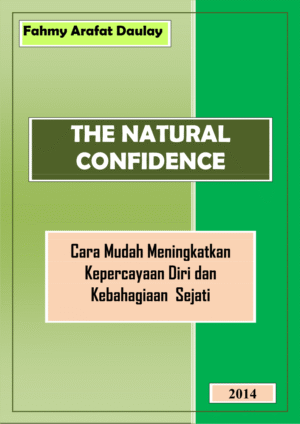
The Natural Confidance
Original price was: Rp105,000.Rp50,500Current price is: Rp50,500. Add to cart
FUNDAMENTAL OF MANAGEMENT
Starting: Rp56,000 Select options This product has multiple variants. The options may be chosen on the product page
RESEARCH METHODOLOGY
Starting: Rp45,000 Select options This product has multiple variants. The options may be chosen on the product page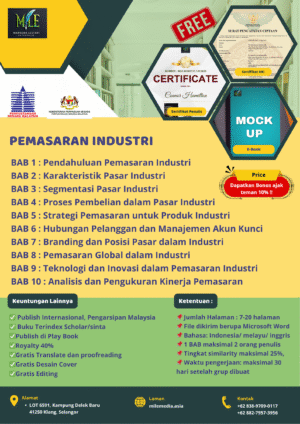
Pemasaran Industri
Rp300,000 Select options This product has multiple variants. The options may be chosen on the product page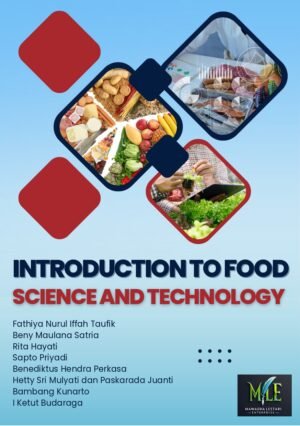
INTRODUCTION TO FOOD SCIENCE AND TECHNOLOGY
Starting: Rp56,000 Select options This product has multiple variants. The options may be chosen on the product page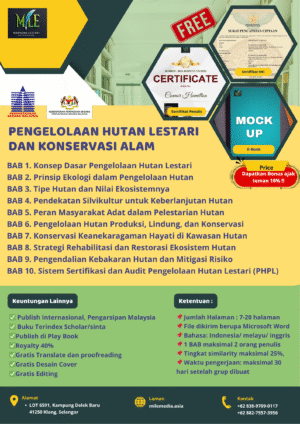
PENGELOLAAN HUTAN LESTARI DAN KONSERVASI ALAM
Rp300,000 Select options This product has multiple variants. The options may be chosen on the product page
DIGITAL COMMUNICATION
Starting: Rp35,000 Select options This product has multiple variants. The options may be chosen on the product page
PENGINDERAAN JAUH UNTUK PEMANTAUAN HUTAN
Rp300,000 Select options This product has multiple variants. The options may be chosen on the product page
10 Juta Perbulan dengan WA Marketing
Original price was: Rp120,000.Rp48,000Current price is: Rp48,000. Add to cart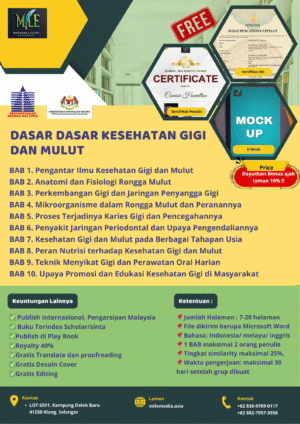
DASAR DASAR KESEHATAN GIGI DAN MULUT
Rp300,000 Select options This product has multiple variants. The options may be chosen on the product page
BUSINESS MANAGEMENT
Starting: Rp45,000 Select options This product has multiple variants. The options may be chosen on the product page
Implementation of Cyber Public Relations Based on Islamic Communication
Starting: Rp59,000 Select options This product has multiple variants. The options may be chosen on the product page
KESEHATAN LINGKUNGAN
Starting: Rp95,000 Select options This product has multiple variants. The options may be chosen on the product page


Reviews
There are no reviews yet.