

INVESTMENT MANAGEMENT
Starting: Rp56,000
Collaboratively written by :
Cepi Pahlevi
Nurlia
Diana Widhi Rachmawati
Yunike Berry
Made Pratiwidewi
Ainun Mardhiah
Dhidhin Noer Ady Rahmanto
Editor :
Mutia Anggraweni, SE.,MM
Aga Arye Perdana, SE., M.Si
EISBN :
978-629-7931-66-1
Alasan berbelanja di Mile Media
- Pengarsipan Buku di Perpustakaan Negara Malaysia
- Penulis mendapatkan royalti 40%
- Publish di Playbook
- Buku terindeks Google Scholar
- Free sertifikat HKI dan sertifikat penulis
Description
Reviews (0)
Description
| Select Book | E-Book, Ebook (Indonesian Version), Printed Book, Printed Book (Indonesian Version) |
|---|---|
| SKU | N/A |
| Category | Book & Ebook, Manajemen |
This book discusses investment management. It covers the basic concepts and scope of investment management, the investment decision-making process, risk and return analysis in investments, investment instruments in financial markets, the role of fundamental analysis in investment decisions, and the role of technical analysis in investment planning.
Investment is a crucial activity in financial management because investment decisions determine how available resources are allocated to generate future economic benefits. From a management perspective, investment is more than simply purchasing stocks, bonds, mutual funds, or other assets. It is a process that includes goal setting, identifying needs and constraints, analyzing opportunities, measuring risk and return, forming a portfolio, implementing, monitoring, evaluating, and continuously adjusting decisions. Developments in financial markets have expanded investment options for individuals and organizations. Investors now have access to a variety of asset classes, capital market instruments, collectiveinvestment products, and technology-based strategies. In Indonesia,developments in investment management have also been accompanied by a strengthening of the regulatory framework. In 2025, the Financial Services Authority (OJK) emphasized the development and strengthening of investment management in the capital market, while the 2025 Capital Market Pocket Book updated its material with market developments through 2025, including carbon trading and financial derivatives with underlying securities (OJK, 2025; OJK, 2026).
In addition to technical and financial aspects, this subchapter also highlights the role of management accounting information in providing relevant differential data and sensitizing readers to the influence of behavioral finance, which often traps investors in decision-making. By understanding all elements of this process,readers are expected to be able not only to make more rational and measured investment decisions but also to develop a disciplined and adaptive mindset to the ever-changing dynamics of the capital market.
Reviews (0)
Leave a Reply
You also like

PUBLIC HEALTH SURVEILLANCE
Starting: Rp65,000 Select options This product has multiple variants. The options may be chosen on the product page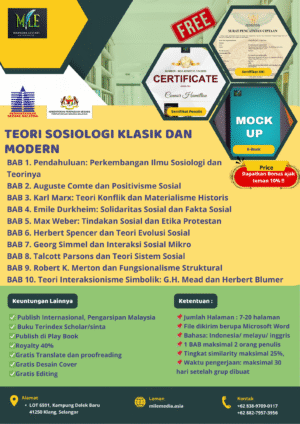
TEORI SOSIOLOGI KLASIK DAN MODERN
Rp300,000 Select options This product has multiple variants. The options may be chosen on the product page
INTERNATIONAL BUSINESS MANAGEMENT
Starting: Rp56,000 Select options This product has multiple variants. The options may be chosen on the product page
PERILAKU KONSUMEN ERA DIGITAL
Rp300,000 Select options This product has multiple variants. The options may be chosen on the product page
KESEHATAN LINGKUNGAN
Starting: Rp95,000 Select options This product has multiple variants. The options may be chosen on the product page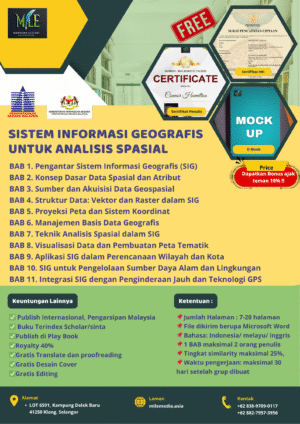
SISTEM INFORMASI GEOGRAFIS UNTUK ANALISIS SPASIAL
Rp300,000 Select options This product has multiple variants. The options may be chosen on the product page
PENGINDERAAN JAUH UNTUK PEMANTAUAN HUTAN
Rp300,000 Select options This product has multiple variants. The options may be chosen on the product page
BUSINESS MANAGEMENT
Starting: Rp45,000 Select options This product has multiple variants. The options may be chosen on the product page
SILVIKULTUR DAN TEKNOLOGI PERBENIHAN HUTAN
Rp300,000 Select options This product has multiple variants. The options may be chosen on the product page
ENTREPRENEURIAL DYNAMICS
Starting: Rp40,000 Select options This product has multiple variants. The options may be chosen on the product page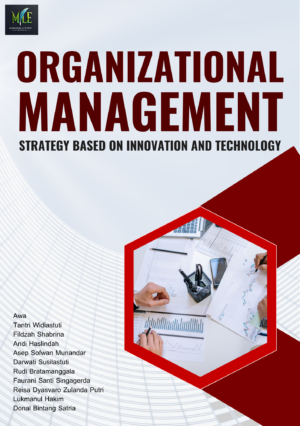
ORGANIZATIONAL MANAGEMENT STRATEGY BASED ON INNOVATION AND TECHNOLOGY
Starting: Rp60,000 Select options This product has multiple variants. The options may be chosen on the product page
INTRODUCTION TO COOPERATIVES
Starting: Rp57,000 Select options This product has multiple variants. The options may be chosen on the product page
RESEARCH METHODOLOGY
Starting: Rp45,000 Select options This product has multiple variants. The options may be chosen on the product page
INTERNATIONAL FINANCIAL MANAGEMENT
Starting: Rp60,000 Select options This product has multiple variants. The options may be chosen on the product page
INTERNATIONAL STRATEGIC MANAGEMENT
Starting: Rp65,000 Select options This product has multiple variants. The options may be chosen on the product page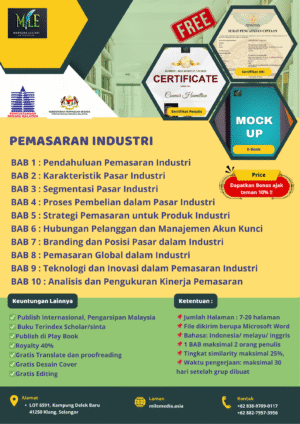
Pemasaran Industri
Rp300,000 Select options This product has multiple variants. The options may be chosen on the product page
HUMAN RESOURCE MANAGEMENT STRATEGIES TO IMPROVE ORGANIZATIONAL PERFORMANCE
Starting: Rp60,000 Select options This product has multiple variants. The options may be chosen on the product page
PEMASARAN JASA
Rp300,000 Select options This product has multiple variants. The options may be chosen on the product page
ISLAMIC EDUCATION SCIENCE
Starting: Rp56,000 Select options This product has multiple variants. The options may be chosen on the product page
Financial Management: Planning, Analysis, and Decision Making
Starting: Rp56,000 Select options This product has multiple variants. The options may be chosen on the product page


Reviews
There are no reviews yet.