
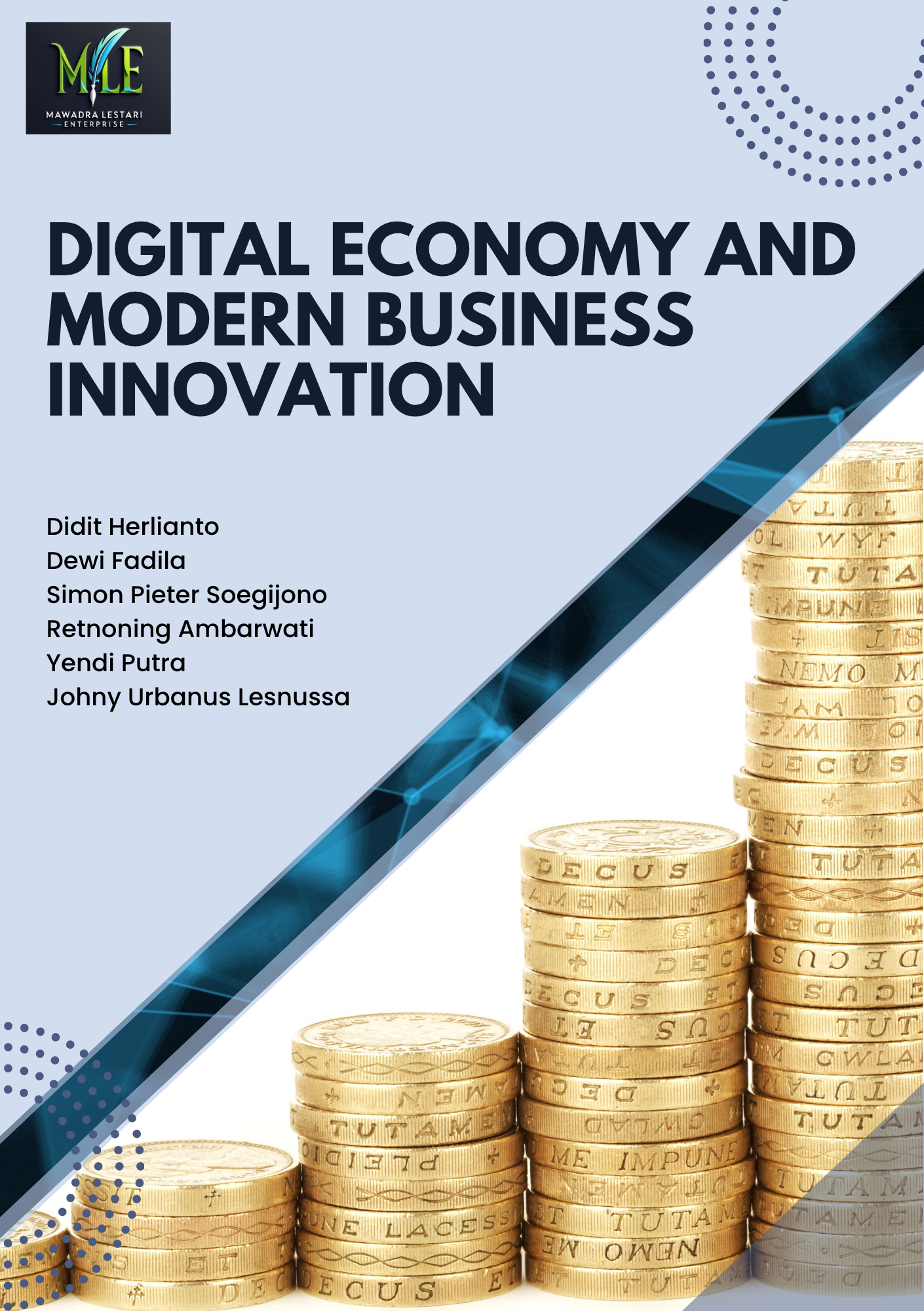
DIGITAL ECONOMY AND MODERN BUSINESS INNOVATION
Starting: Rp59,000
Collaboratively written by :
Didit Herlianto
Dewi Fadila
Simon Pieter Soegijono
Retnoning Ambarwati
Yendi Putra
Johny Urbanus Lesnussa
Editor :
Fhajri Arye Gemilang, SE, BBA HONS,MM,NCT,CDMS,CBC,CPS
Meta Lubis, S.Pd, M.Si
EISBN :
978-629-7931-24-1
Alasan berbelanja di Mile Media
- Pengarsipan Buku di Perpustakaan Negara Malaysia
- Penulis mendapatkan royalti 40%
- Publish di Playbook
- Buku terindeks Google Scholar
- Free sertifikat HKI dan sertifikat penulis
Description
Reviews (0)
Description
| Select Book | E-Book, Ebook (Indonesian Version), Printed Book, Printed Book (Indonesian Version) |
|---|---|
| SKU | N/A |
| Category | Book & Ebook, Ekonomi |
This book discusses the digital economy and modern business innovation. It includes an introduction to the digital economy, digital business models, digital innovation and its impact on productivity and economic growth, digital finance and financial technology, regulation, ethics, and security in the digital economy, as well as human resource challenges and the digital divide in business innovation.
The transformation of the global economy in recent decades has demonstrated a fundamental shift from a resource-based economy to a technology- and information-based economy. The rapid development of digital technologies, particularly the internet, cloud computing, artificial intelligence, and big data analytics, has created a new economic landscape known as the digital economy. This phenomenon is not only changing the way individuals interact but also transforming how companies operate, create value, and compete in an increasingly integrated global marketplace.
The digital economy essentially represents the integration of digital technology into all economic activities, from production and distribution to consumption. In this context, data becomes a strategic asset with high economic value, while digital platforms act as key intermediaries connecting producers and consumers. This shift has given rise to new, more flexible, efficient, and network-based business models, such as e-commerce, financial technology (fintech), and the sharing economy. Thus, the digital economy is understood not merely as a separate sector, but as an economic system that permeates various traditional sectors.
Reviews (0)
Leave a Reply
You also like

10 Juta Perbulan dengan WA Marketing
Original price was: Rp120,000.Rp48,000Current price is: Rp48,000. Add to cart
DIGITAL COMMUNICATION
Starting: Rp35,000 Select options This product has multiple variants. The options may be chosen on the product page
KEBIJAKAN KEHUTANAN DAN PEMBERDAYAAN MASYARAKAT
Rp300,000 Select options This product has multiple variants. The options may be chosen on the product page
PENGELOLAAN HUTAN LESTARI DAN KONSERVASI ALAM
Rp300,000 Select options This product has multiple variants. The options may be chosen on the product page
PUBLIC HEALTH SURVEILLANCE
Starting: Rp65,000 Select options This product has multiple variants. The options may be chosen on the product page
PENGINDERAAN JAUH UNTUK PEMANTAUAN HUTAN
Rp300,000 Select options This product has multiple variants. The options may be chosen on the product page
ANALISIS DATA EKONOMI UNTUK PENGAMBILAN KEPUTUSAN
Rp300,000 Select options This product has multiple variants. The options may be chosen on the product page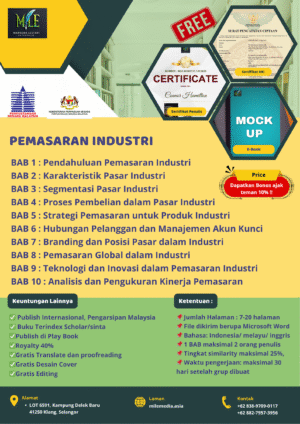
Pemasaran Industri
Rp300,000 Select options This product has multiple variants. The options may be chosen on the product page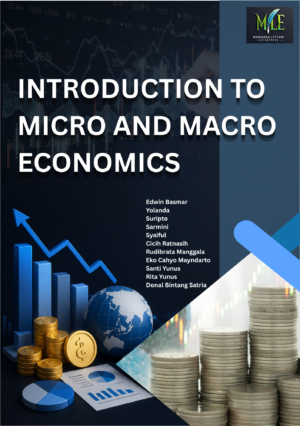
INTRODUCTION TO MICRO AND MACRO ECONOMICS
Starting: Rp65,000 Select options This product has multiple variants. The options may be chosen on the product page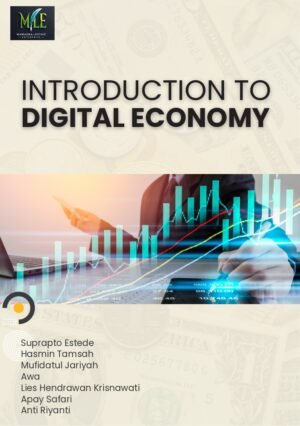
INTRODUCTION TO DIGITAL ECONOMY
Starting: Rp58,000 Select options This product has multiple variants. The options may be chosen on the product page
ISLAMIC EDUCATION SCIENCE
Starting: Rp56,000 Select options This product has multiple variants. The options may be chosen on the product page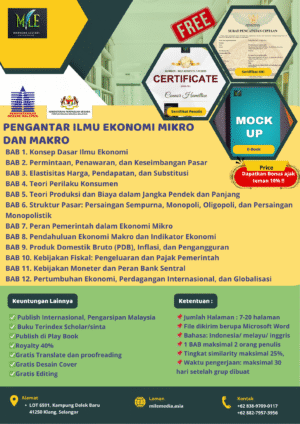
PENGANTAR ILMU EKONOMI MIKRO DAN MAKRO
Rp300,000 Select options This product has multiple variants. The options may be chosen on the product page
FUNDAMENTAL OF MANAGEMENT
Starting: Rp56,000 Select options This product has multiple variants. The options may be chosen on the product page
RESEARCH METHODOLOGY
Starting: Rp45,000 Select options This product has multiple variants. The options may be chosen on the product page
ENVIRONMENTAL ECONOMICS
Starting: Rp58,000 Select options This product has multiple variants. The options may be chosen on the product page
EDUCATIONAL MANAGEMENT
Starting: Rp56,000 Select options This product has multiple variants. The options may be chosen on the product page
ANTROPOLOGI EKONOMI DAN POLITIK MASYARAKAT TRADISIONAL
Rp300,000 Select options This product has multiple variants. The options may be chosen on the product page
ENTREPRENEURIAL DYNAMICS
Starting: Rp40,000 Select options This product has multiple variants. The options may be chosen on the product page
POSTHARVEST PHYSIOLOGY AND TECHNOLOGY BASED ON OBE
Starting: Rp56,000 Select options This product has multiple variants. The options may be chosen on the product page


Reviews
There are no reviews yet.