
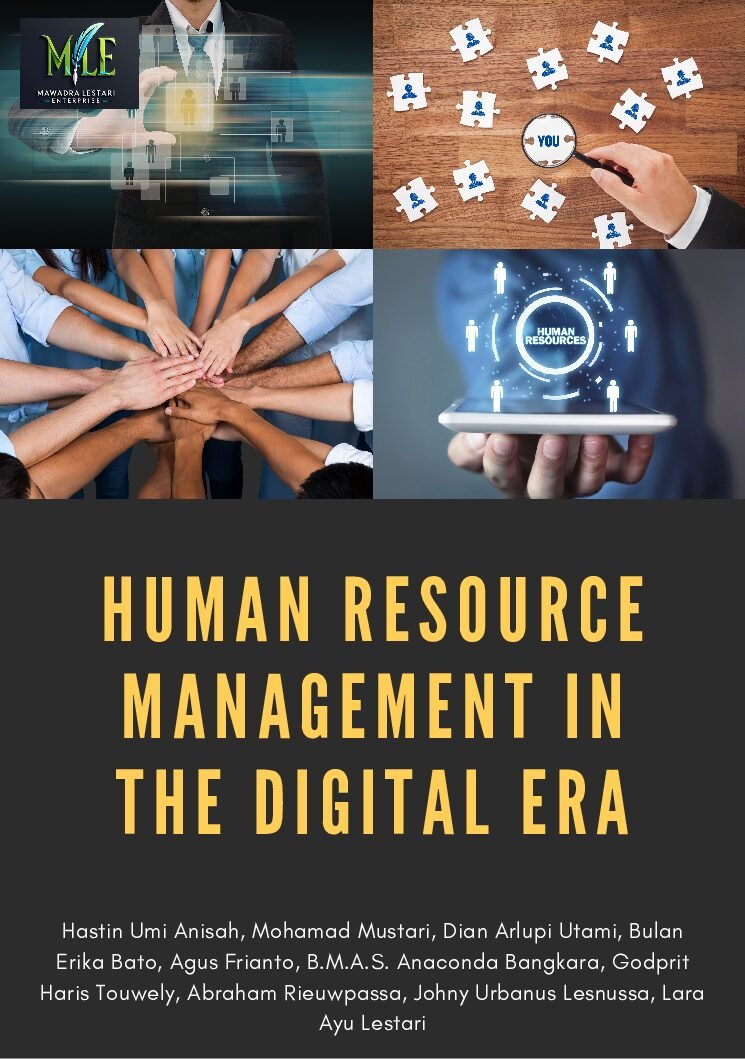
Human Resource Management in the Digital Era
Starting: Rp56,000
Collaboratively written by :
Hastin Umi Anisah
Mohamad Mustari
Dian Arlupi Utami
Bulan Erika Bato
Agus Frianto
B.M.A.S. Anaconda Bangkara
Godprit Haris Touwely
Abraham Rieuwpassa
Johny Urbanus Lesnussa
Lara Ayu Lestari
EDITOR :
Mutia Anggraweni, SE.,MM
Aga Arye Perdana, SE., M.Si
EISBN :
978-629-7931-08-1
Alasan berbelanja di Mile Media
- Pengarsipan Buku di Perpustakaan Negara Malaysia
- Penulis mendapatkan royalti 40%
- Publish di Playbook
- Buku terindeks Google Scholar
- Free sertifikat HKI dan sertifikat penulis
Description
Reviews (0)
Description
| Select Book | E-Book, Ebook (Indonesian Version), Printed Book, Printed Book (Indonesian Version) |
|---|---|
| SKU | N/A |
| Category | Book & Ebook, Manajemen |
This book discusses human resource management in the digital era. It covers the basic concepts and evolution of human resource management, human resource management, digital recruitment and selection, competency development and technology-based learning, data-driven performance management and assessment, digital leadership and organizational transformation, organizational culture and employee engagement in the digital ecosystem, well-being, work life balance and employee mental health, as well as cloud-based HR management, AI, and people analytics.
The existence of individuals within an organization or company transcends their function as production elements equivalent to capital or technology. Humans are multidimensional entities endowed with consciousness, emotions, and the potential for self-actualization. The Resource-Based View (RBV) framework, as proposed by Barney (1991), states that these unique attributes make human resources the foundation of sustainable competitive advantage, given their valuable, rare, difficult-to-imitate, and irreplaceable nature.
The most fundamental difference between humans and other resources lies in their ontological status. On the one hand, resources such as capital, equipment, technology, and raw materials are passive, unconscious objects, unable to determine their own destiny, and only become meaningful when operated by humans. On the other hand, humans are active subjects with consciousness, free will, and theability to respond to situations independently.
Reviews (0)
Leave a Reply
You also like
10 Juta Perbulan dengan WA Marketing
Original price was: Rp120,000.Rp48,000Current price is: Rp48,000. Add to cart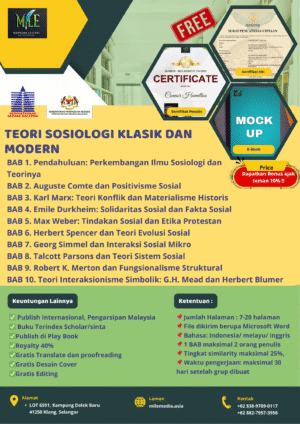
TEORI SOSIOLOGI KLASIK DAN MODERN
Rp300,000 Select options This product has multiple variants. The options may be chosen on the product page
ANTROPOLOGI EKONOMI DAN POLITIK MASYARAKAT TRADISIONAL
Rp300,000 Select options This product has multiple variants. The options may be chosen on the product page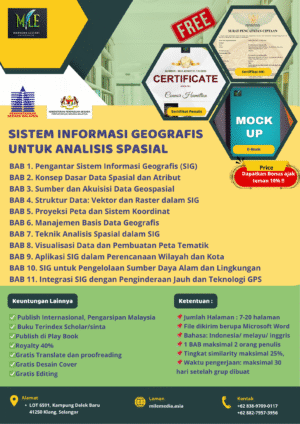
SISTEM INFORMASI GEOGRAFIS UNTUK ANALISIS SPASIAL
Rp300,000 Select options This product has multiple variants. The options may be chosen on the product page
BUSINESS MANAGEMENT
Starting: Rp45,000 Select options This product has multiple variants. The options may be chosen on the product page
PUBLIC HEALTH SURVEILLANCE
Starting: Rp65,000 Select options This product has multiple variants. The options may be chosen on the product page
SILVIKULTUR DAN TEKNOLOGI PERBENIHAN HUTAN
Rp300,000 Select options This product has multiple variants. The options may be chosen on the product page
PERILAKU KONSUMEN ERA DIGITAL
Rp300,000 Select options This product has multiple variants. The options may be chosen on the product page
PEMASARAN JASA
Rp300,000 Select options This product has multiple variants. The options may be chosen on the product page
ISLAMIC EDUCATION SCIENCE
Starting: Rp56,000 Select options This product has multiple variants. The options may be chosen on the product page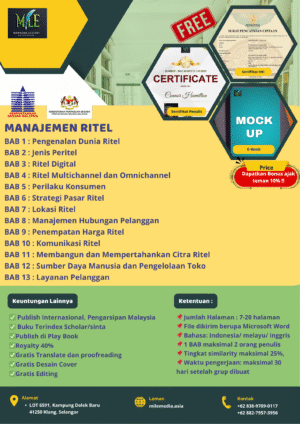
MANAJEMEN RITEL
Rp300,000 Select options This product has multiple variants. The options may be chosen on the product page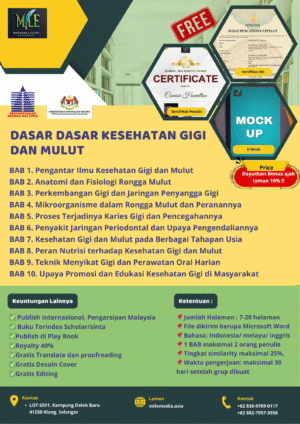
DASAR DASAR KESEHATAN GIGI DAN MULUT
Rp300,000 Select options This product has multiple variants. The options may be chosen on the product page
ENTREPRENEURIAL DYNAMICS
Starting: Rp40,000 Select options This product has multiple variants. The options may be chosen on the product page
PENGINDERAAN JAUH UNTUK PEMANTAUAN HUTAN
Rp300,000 Select options This product has multiple variants. The options may be chosen on the product pageAKUNTANSI MANAJEMEN
Rp300,000 Select options This product has multiple variants. The options may be chosen on the product page
INTERNATIONAL STRATEGIC MANAGEMENT
Starting: Rp65,000 Select options This product has multiple variants. The options may be chosen on the product page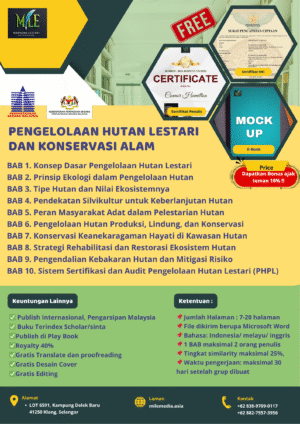
PENGELOLAAN HUTAN LESTARI DAN KONSERVASI ALAM
Rp300,000 Select options This product has multiple variants. The options may be chosen on the product page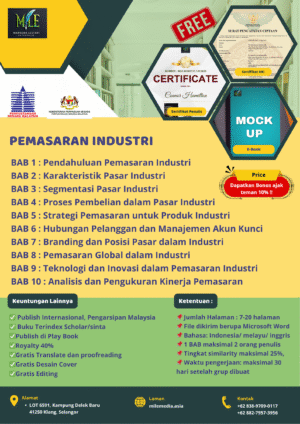
Pemasaran Industri
Rp300,000 Select options This product has multiple variants. The options may be chosen on the product page
INTRODUCTION TO CURRICULUM
Starting: Rp49,000 Select options This product has multiple variants. The options may be chosen on the product page
Financial Management: Planning, Analysis, and Decision Making
Starting: Rp56,000 Select options This product has multiple variants. The options may be chosen on the product page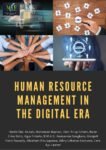


Reviews
There are no reviews yet.